
By Sean Licciardi
The bumblebee arrived on a Tuesday with the urgency of a messenger convinced that kingdoms rose and fell according to punctual hovering.
She struck the glass beside my head three times, rebounded, and hovered before me, vibrating with accusation.
“Bzzt,” she said.
I had been trying to read.
The bumblebee had never shown much respect for literature unless it involved maps, prophecies, or flowers of strategic importance.
She was a small, round creature — a flying teacup with wings too small for her ambition — yet she carried herself with the solemn authority of a general who had misplaced an army and meant to blame somebody else for it.
“Not now,” I told her.
She darted forward and tapped my wrist with her ceremonial thorn.
That got my attention.
The thorn was tiny, no bigger than a splinter, and had once belonged to the rosebush beside the blue front door. The bumblebee had claimed it weeks earlier after a dramatic and almost entirely one-sided confrontation with the rose. Since then, she wore the thorn tucked beneath her body like a sword.
She had named the rosebush Rosedoor, because it grew beside the door, and because ordinary names were beneath her.
Above the blue door sat the peephole, which the bumblebee referred to only as the All-Seeing Eye.
“It is a peephole,” I had once explained.
She had hovered in front of my nose, offended by my lack of imagination.
Now she jabbed the thorn at the window again.
“Bzzt. Bzzt bzzt.”
I sighed, put down my book, and followed her outside.
The garden lay quiet in the late afternoon light. Rosemary leaned silver-green in the breeze. The terracotta pots still held the day’s warmth. Nothing looked urgent. Certainly nothing looked like the opening movement of an epic.
The bumblebee zigzagged towards the rosebush, circled it twice, then shot across the path to the old watering can by the lemon tree.
She hovered over the spout.
“Bzzt!”
“Yes, I see the watering can.”
Up she went, then down again, then towards the gate, then back to me. Her meaning, if she had one, was buried beneath several layers of indignation.
“You could at least try nouns,” I said.
The bumblebee ignored this and landed briefly on my sleeve, which she did only in moments of seriousness.
Her tiny feet pressed through the fabric.
Then she lifted again and flew, not to the gate as I had expected, but to the narrow gap between the wall and the stacked firewood, where shadows gathered even in daylight.
There she stopped.
Not hovered. Stopped.
I had never seen a bee do that before.
The air in that corner looked wrong. Not dark, exactly. Folded. As though the garden had been stitched neatly together everywhere else and, in that one place, the seam had come loose.
The bumblebee made a low, steady sound.
Not her usual officious buzzing. This was different. A held note. A warning, or perhaps a prayer.
I stepped closer.
The smell changed first.
Not rosemary. Not lemon tree. Not warm terracotta.
This smelled green and cold and far away — rain on moss, bark after dusk, earth that had never known paving stones or garden hoses or suburban property lines.
The hairs on my arms rose.
From the folded patch of air came the faintest movement, then the unmistakable shape of something pushing through from the other side.
A leg.
Jointed. Delicate.
Another.
Then a wasp emerged, long-waisted and lacquer-black, drawing itself into my garden with the slow confidence of something that did not expect resistance.
Behind it, the seam in the air quivered wider.
The bumblebee launched herself at once.
I had seen her chase off other bees, and once a butterfly, though I still maintain that had been a misunderstanding. I had never seen her attack with intent.
She struck the wasp in the head, reeled back, and struck again.
The wasp lurched, surprised more than hurt.
The bumblebee swung back towards me and hovered hard before my face.
“BZZT!”
That, finally, I understood.
I grabbed the watering can.
The wasp had half turned towards the opening, as though deciding whether to summon reinforcements. I swung the can like a club. Water sloshed over my shoes and across the stones. The wasp shot upward in panic. The bumblebee hit it again, driving it away from the seam and out towards the alley beyond the fence.
By the time I looked back, the fold in the air had begun to close.
The smell of moss and rain thinned. The shadow flattened into an ordinary shadow.
The bumblebee descended slowly and landed on the rosebush, trembling with exhaustion and vindication.
For a moment, neither of us moved.
Then she lifted the Thorn of Rosedoor in her best impression of a formal salute and gave me one soft, satisfied bzzt.
I looked at the blue door, at the peephole above it, and at the narrow corner where another world had nearly come through my garden wall.
“All right,” I said quietly.
The bumblebee settled herself as though this confirmed everything she had ever suspected.
She had not imagined a quest.
I had simply failed to recognise one.

About the Author
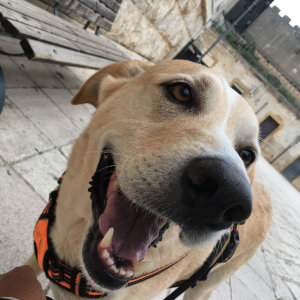
Sean Licciardi is a writer with a background in maritime operations and a longstanding love of Argentine historieta.
His fiction blends precision, whimsy and a fondness for the gently absurd, often finding wonder in overlooked corners of the everyday.
His writing companions are Winston, a senior Labrador, and Sasha, a Rottweiler. Their companionship has influenced many of his reflections on loyalty, curiosity and the small moments that matter.
He is currently at work on a number of larger creative projects.
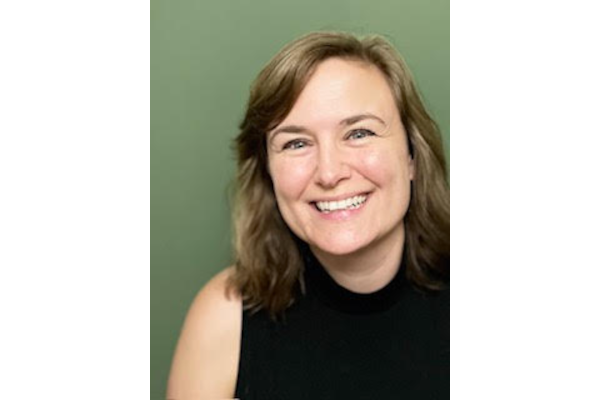
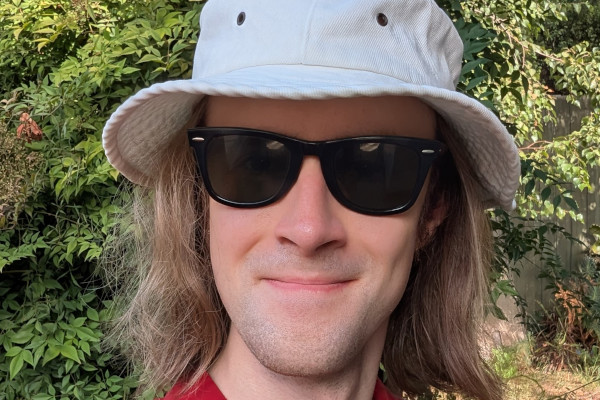
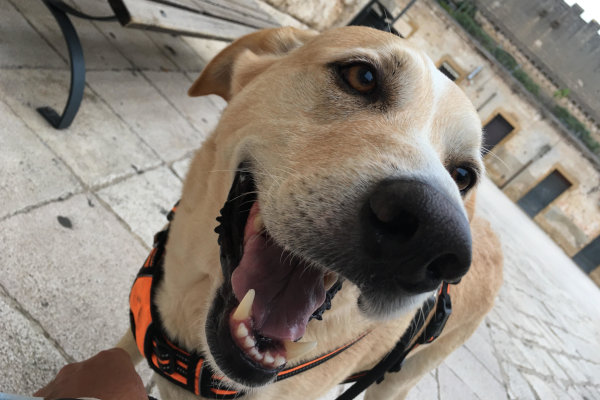



 Alistair Lloyd is a Melbourne based writer and narrator who has been consuming good quality science fiction and fantasy most of his life.
 Tom Wrosch is a retired policy analyst with the State of Oregon, and resides with his wife in Salem.
 James Walton was a librarian, a farm labourer, and mostly a public sector union official.
 Mark is an astrophysicist and space scientist who worked on the Cassini/Huygens mission to Saturn. Following this he worked in computer consultancy, engineering, and high energy research (with a stint at the JET Fusion Torus).
 Emma Louise Gill (she/her) is a British-Australian spec fic writer and consumer of vast amounts of coffee. Brought up on a diet of English lit, she rebelled and now spends her time writing explosive space opera and other fantastical things in
 Barry Yedvobnick is a recently retired Biology Professor. He performed molecular biology and genetic research, and taught, at Emory University in Atlanta for 34 years. He is new to fiction writing, and enjoys taking real science a step or two beyond its known boundaries in his
 Tim Borella is an Australian author, mainly of short speculative fiction published in anthologies, online and in podcasts.
 Geraldine Borella writes fiction for children, young adults and adults. Her work has been published by Deadset Press, IFWG Publishing, Wombat Books/Rhiza Edge, AHWA/Midnight Echo, Antipodean SF, Shacklebound Books, Black Ink Fiction, Paramour Ink Fiction, House of Loki and Raven & Drake
 My time at Nambucca Valley Community Radio began back in 2016 after moving into the area from Sydney.
 Tara Campbell is an award-winning writer, teacher, Kimbilio Fellow, fiction co-editor at Barrelhouse, and graduate of American University's MFA in Creative Writing.

 Brian Biswas lives in Chapel Hill, North Carolina, USA.
 Sarah Jane Justice is an Adelaide-based fiction writer, poet, musician and spoken word artist.