
By KJ Hannah Greenberg
We ought to have referred to Mrs. Finkelstein as “Dr. Finkelstein” or as “Professor Finkelstein,” or, somewhat informally, as “Dr. F.” Nonetheless, we called her “Mrs.” Whereas she was faultless for Professor Lazar’s death — he had expired from a heart attack during the recitation period following ours — and whereas she was faultless for being burdened with exciting us about scholarship during the final five weeks of a spring semester class, she gave the impression of being more of a grandmother than an authority on pharmacognosy.
It was not her orthopaedic shoes nor her ever-present cardigans that lent her the spectre of age. Likewise, the circulating rumours about her having been suddenly called from her retirement from academia didn’t dim our regard for her. More accurately, it was the way in which she announced class assignments by writing on the room’s smart whiteboard with a stylus and the way in which she used handouts, not the Internet, to communicate the specifics of our homework. What’s more, that lady publicly scoffed at contemporary pharmacology, claiming that most conventional drugs are traceable to herbal remedies.
Although many of my fellow students disagreed with her sentiments, none dared to contradict her; most of us were premeds, i.e., undergraduates who needed the highest grade point averages that we could achieve. We knew that Professor Lazar, prior, had established class participation as 12% of the course’s evaluation and we held it as unacceptable to miss medical schools’ threshold because of our arguing with a grandma about the use of allopathic treatments.
Meanwhile, my roommate, a chemistry major who maintained a “secret laboratory,” specifically, glassware and various compounds, in his fraternity’s unused, rooftop bathtub, and who had taken the same course a semester earlier, entirely under Professor Lazar, often laughed when I storied him about Mrs. Finkelstein. He’d remind me how heating ethanol with bleaching powder resulted in chloroform and how acetaminophen is formed from an amide functional group. Namely, he’d chide me that extant drugs don’t necessarily derive from vegetal foundations.
I’d counter that fungi has long served as a synthetic regent for anaesthesia and that valerian root has proved at least as potent as Valium. While his statements had traction and were important to wannabe doctors, I asserted that his analyses were prejudiced by our university’s natural science curricula, the contradistinction to which Mrs. Finkelstein was helping us realise. Forasmuch as we science majors were being taught to laud testable hypotheses and to worship logic, empirical evidence did not prove everything. There are manifold cases of unexplained, spontaneous remissions. Additionally, there are many instances of cured, “invariably fatal” conditions.
So, between me and my schoolfellows’ need to score well in Mrs. Finkelstein’s class and our surreptitious thrill that a teacher of ours was challenging the hegemony, we missed none of the ten addresses that she gave during her five week tenure. Consequently, we were rewarded not just with increased divergent thinking but also with some fun.
To be more precise, before her brief employment ended, Mrs. Finkelstein took us on a fieldtrip. In view of the fact that that April’s weather was mildly warm and exceptionally dry, our visit to a local arboretum was extraordinary. That outdoor conservatory contained flowering dogwoods, slippery elms, eastern hemlocks, sweet gums, paw paws, and over fifty other species of trees. Next to its wooded path was the field where Mrs. Finkelstein lectured us.
In that meadow, florae thrived. That pasture’s annuals, biennials, and perennials were typical of the forbs people used for thousands of years for plant-based healing.
Mrs. Finkelstein tasked us to identify, to photograph, on our smartphones (she was old-fashioned in her choice of implements contemporaneous with being savvy about high-tech), and to describe the beneficial properties of elderberry, dandelion, garlic mustard, mint, lavender, jewelweed, plantain, angelica, dogbane, and milkweed. We were also asked to list curative uses for each plant and then to compare and contract our recorded, state-of-the-art uses with historical ones. Additionally, we were to show the differences and likenesses between those plants’ essences and their mainstream, manmade complements.
Moreover, we could earn bonus points if we similarly assessed pennywort, wild ginger, blue cohosh, chickweed, and spiderwort. As a result of our communal lust for high rankings, many of us wandered back beneath the trees to search for the shade-loving herbs on Mrs. Finkelstein’s supplemental list.
As the majority of the class trudged beneath the trees, some of my contemporaries grumbled. To them, participating in a professor-led jaunt was exotic but undreamed of. They felt that such a pursuit was filching time away from the hours that they perceived that they needed to memorise the molecular structure of select alkanes, cycloalkanes, functional groups, ethers, epoxides, and sulfides for our Organic Chemistry final.
Conversely, I was thrilled by our botanical garden tour. Father had spoken of how, when he was a Materials Science and Engineering student, at a university in Pittsburgh, America’s former capital of steel manufacturing, he had crossed mills’ catwalks to see molten iron produced in furnaces, then poured into secondary furnaces where oxygen was injected into the metal, then cast into molds, then hot rolled and shaped, and then pickled in acid and coated with zinc.
Additionally, Mother, who had studied art history at a New York City university, had spoken of her hours spent listening to museum talk and about her visits to the metropolis’ famous architecture. In her urban design class’s junkets, she had been able to soak in the wonders of The Ansonia Hotel, MoMa, the Flatiron Building, 56 Leonard Street, The Dakota, The Seagram Building, the Metropolitan Museum of Art, The New York Stock Exchange, Lever House, and The Brooklyn Bridge. Once, after she had attended a Museum of the City of New York discourse on The Public Design Commission, she had even contemplated changing her to major to Urban Planning.
As the afternoon among the trees and woody plants whiled away, some of my friends were able to temporarily push aside thoughts of isomerism in hydrocarbonates. One mate took frame after frame of butterflies’ oviparous activities among milkweed. Another companion, who rarely ventured outside, so insistent was he that he not only be admitted to medical school but also that he be admitted with a free ride, became so enamoured with the crystal-like quality of the sky that he spent a long interval staring at the clouds. A third elected to pause her search for the designated plants to roll around in a clump of sweetgrass.
Looking back on that day, over and above the sum of those inconceivable five weeks, I don’t believe that Mrs. Finkelstein’s has striven to make herbalists of us. That university teacher, herself, possessed an M.S. in Molecular and Environmental Plant Science and a Ph.D. in Plant Pathology. I think, instead, that she had anticipated that by exposing us to ideas beyond those offered by our staid syllabus, she would empower us to solve a greater array of health dilemmas. Likely, she had hoped that her instruction would enable us to begin to broaden our solution sets, to consider looking to old-fashioned responses and to other sorts of “out-of-the-box” thinking in addition to corroborating with protocol. Back then, as of now, given evidence-based practices, insurers pay for “nonstandard” treatments.
Currently, I sometimes bump into my former classmates at medical conventions. One former pal is a paediatric oncologist, another is a neuro-ophthalmologist, and a third is an interventional radiologist. Few of them remember Mrs. Finkelstein. I wonder if they think about her teachings or how her compassion for our career dreams influenced her creation of an excursion-related, extra credit opportunity (few of our professors were equally kind-hearted. Those outwardly unfeeling science and then medical school faculty members, overall, seemed bent on fashioning us into automatons while chastising us to become exacting, if not humane, doctors.)
As for me, I swerved from my peers’ path. Rather than devote my life to clinical work, I accepted a post at the NIH. I research green answers to advanced cancers and to virulent diseases. Long ago, my office promoted the Pacific yew as a “cure-all” for lung, breast and ovarian cancer and touted, during the worst of COVID, the use of astragalus root to fortify the immune system. For my colleagues and me, some of the best answers to health quandaries arise from combining traditional practices with modern medicine.
Recently, I read on a WhatsApp chat, populated by folks who enrolled in my undergraduate major, that Mrs. Finkelstein had died. A copy of her obituary had been scanned and placed there. That article stated that she had been a great-grandmother and had lived into her eighties. That epitaph lauded her many academic accomplishments, calling her a tribute to all that is good about integrated healthcare. Apparently, she had multiple drug patents to her name along with many awards from The American Medical Association, The International Society for Pharmacoepidemiology, The European Centre for Disease and Control, and The World Medical Association. To boot, her findings were regularly published in Phytomedicine, in Pharmacognosy Research, and in The Journal of Alternative and Complimentary Medicine.
No one had wished Professor Lazar to drop dead. Yet had he not unexpectedly perished, my cohorts and I would never have been privileged, even for that short span during which she taught us about the properties of naturally-sourced pharmaceuticals, to have been nurtured by Mrs. Finkelstein.

About the Author
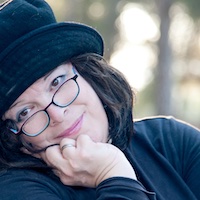 KJ Hannah Greenberg has been playing with words for an awfully long time. Initially a rhetoric professor and a National Endowment for the Humanities Scholar, she shed her academic laurels to romp around with a prickle of imaginary hedgehogs.
Thereafter, she's been nominated once for The Best of the Net in poetry, once for The Best of the Net in art, three times for the Pushcart Prize in Literature for poetry, once for the Pushcart Prize in Literature for fiction, once for the Million Writers Award for fiction, and once for the PEN/Diamonstein-Spielvogel Award for the Art of the Essay. To boot, Hannah’s had more than three dozen books published and has served as an editor for several literary journals.
Find out more at her website: <http://kjhannahgreenberg.net/>.







 Brian Biswas lives in Chapel Hill, North Carolina, USA.
 Ed lives with his wife plus a magical assortment of native animals in tropical North Queensland.
 Sarah Jane Justice is an Adelaide-based fiction writer, poet, musician and spoken word artist.
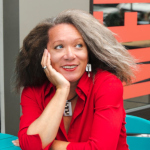 Tara Campbell is an award-winning writer, teacher, Kimbilio Fellow, fiction co-editor at Barrelhouse, and graduate of American University's MFA in Creative Writing.
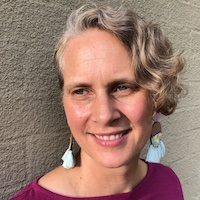 Merri Andrew writes poetry and short fiction, some of which has appeared in Cordite, Be:longing, Baby Teeth and Islet, among other places.
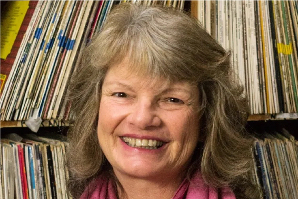 My time at Nambucca Valley Community Radio began back in 2016 after moving into the area from Sydney.
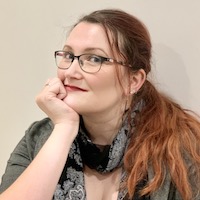 Emma Louise Gill (she/her) is a British-Australian spec fic writer and consumer of vast amounts of coffee. Brought up on a diet of English lit, she rebelled and now spends her time writing explosive space opera and other fantastical things in
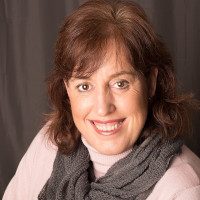 Geraldine Borella writes fiction for children, young adults and adults. Her work has been published by Deadset Press, IFWG Publishing, Wombat Books/Rhiza Edge, AHWA/Midnight Echo, Antipodean SF, Shacklebound Books, Black Ink Fiction, Paramour Ink Fiction, House of Loki and Raven & Drake
 Alistair Lloyd is a Melbourne based writer and narrator who has been consuming good quality science fiction and fantasy most of his life.
 Mark is an astrophysicist and space scientist who worked on the Cassini/Huygens mission to Saturn. Following this he worked in computer consultancy, engineering, and high energy research (with a stint at the JET Fusion Torus).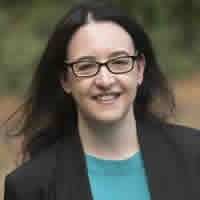
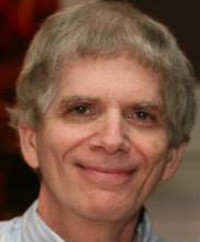 Barry Yedvobnick is a recently retired Biology Professor. He performed molecular biology and genetic research, and taught, at Emory University in Atlanta for 34 years. He is new to fiction writing, and enjoys taking real science a step or two beyond its known boundaries in his
 Tim Borella is an Australian author, mainly of short speculative fiction published in anthologies, online and in podcasts.