
By G. W. McClary
We’ve been with our tree since I was a child. My mother tells me I was too young to remember the change, but it’s been relayed to me countless times. The mounting data which suggested Earth was becoming unlivable and something had to be done. Trees were brought in from the northern reaches, along with soil, where they still grew. Domes were placed around them to contain the precious oxygen. Families were strictly limited to one child each, as a two-tree dome was unsustainable. I heard a story about families that were caught having more babies, but only once, and my father assures me those were dark times that were well in the rear-view mirror.
“Rear-view mirror?” I asked him.
“Yes, there used to be things called cars. They had engines that guzzled fuel, and they allowed us to travel great distances. They had mirrors… Long story short, it means they’re in the past.” I knew from my father’s tone that the subject had been discussed to its fullest, and I dared never to broach the subject again.
Sometimes my father donned his life suit and made journeys to other domes for trading and supplies. It was always so scary to watch him leave, to watch him disappear into the airlocked chamber, where I knew he would be gone for hours. He’d come back drenched in sweat, labouring under an armload of necessities.
The little patch of land next to our house was our meal ticket, its production of tomatoes securing us a spot in the Collective. It wasn’t long before I too plucked them from the sweating vines, supported by rusting metal braces. They were so lustrous in the desert sun, red and green in their tumescence, bursting at the seams, our lifeline. Luckily for us, the eradication of the seasons some generations back allowed us to grow them year-round.
We led a simple life, trading books with the other families, which we would huddle around and listen to, my mother and father taking turns. I remember the day they let me handle the precious role of reader, nerves reducing my recitation to stutters and awkward stops. But my tongue and mind soon became deft enough to tell a good story. Still, my heart longed for the thrill of leaving the dome. I pestered my father endlessly, but he hadn’t relented.
“You’ll go when I’m unable to,” he said in his curt way. He had the talent of stopping conversations short, before the germ of rebellion could even be voiced. And though I rebelled in my heart, I stayed true to our pact with the Collective.
As I entered into adulthood, construction began on a heat mine which rested on the horizon. I watched as the machines bore holes into the earth, the drills and pistons siphoning from the ever-warming core. It wasn’t long before the first tree died.
Emissaries from the mine outfitted in life suits came to our dome. They offered to buy up our land in exchange for residence in a budding metropolis to the east, where we would rest easy, with plenty of oxygen and air conditioning. The luxuries grew and glowed in my mind. My mouth watered at the thought of so many creature comforts.
My mother pleaded with them, telling them their mining was only making the problem worse. They doubled their offer, but my parents wouldn’t budge, nor did any members of the Collective. I took some comfort knowing none of us were so easily bought.
“Have it your way,” one of them said, stowing the unsigned contract in his briefcase.
The tree belonging to one of our neighbours began to rot and wilt. The soil was tested, and it had been poisoned remotely, surely by the heat miners. If they couldn’t buy our land, it seemed they would make it unlivable.
All the adults of the Collective, I among them, gathered at our house with their life suits in tow. We would be overtaking the heat mine, by force if necessary. I donned my suit with the others and strapped on a pneumatic rifle. My first outing into that unbreathable air I’d so mythologised was a raid.
We came upon the mine after a few hours’ walk. The workers were unprepared, giving little resistance, and we mowed them down one by one. We thought more would come to replace them, but the operation remained abandoned.
The story of the sacking of the heat mine became a legend among the Collective, complete with folkloric flourishes like severed heads left as warnings, a brief restoration of the Earth. I passed down the story to my children, and they to theirs. I was there, and by god, I too blasted some of them down. Good riddance.

About the Author
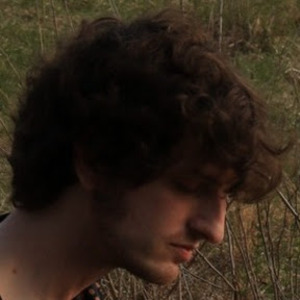 G. W. McClary is a native of Ohio with a B.A. in literature and founder of The Storycraft Co-op.
His stories have appeared in Nova Literary-Arts Magazine, Bewildering Stories, Razzle Dazzle Cafe, and elsewhere.
You can keep up with his new releases on Instagram: @gwmcclary



 Tara Campbell is an award-winning writer, teacher, Kimbilio Fellow, fiction co-editor at Barrelhouse, and graduate of American University's MFA in Creative Writing.
 Sarah Jane Justice is an Adelaide-based fiction writer, poet, musician and spoken word artist.
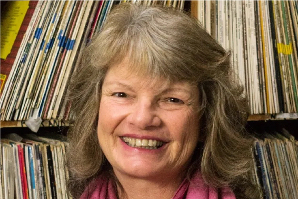 My time at Nambucca Valley Community Radio began back in 2016 after moving into the area from Sydney.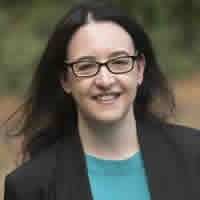
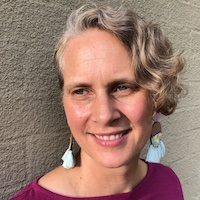 Merri Andrew writes poetry and short fiction, some of which has appeared in Cordite, Be:longing, Baby Teeth and Islet, among other places.
 Ed lives with his wife plus a magical assortment of native animals in tropical North Queensland.
 Mark is an astrophysicist and space scientist who worked on the Cassini/Huygens mission to Saturn. Following this he worked in computer consultancy, engineering, and high energy research (with a stint at the JET Fusion Torus).
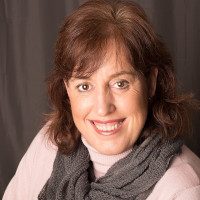 Geraldine Borella writes fiction for children, young adults and adults. Her work has been published by Deadset Press, IFWG Publishing, Wombat Books/Rhiza Edge, AHWA/Midnight Echo, Antipodean SF, Shacklebound Books, Black Ink Fiction, Paramour Ink Fiction, House of Loki and Raven & Drake
 Alistair Lloyd is a Melbourne based writer and narrator who has been consuming good quality science fiction and fantasy most of his life.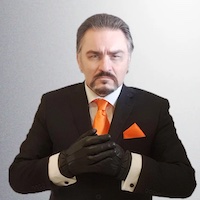
 Brian Biswas lives in Chapel Hill, North Carolina, USA.
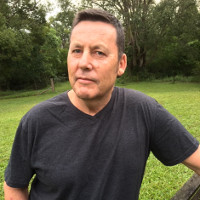 Tim Borella is an Australian author, mainly of short speculative fiction published in anthologies, online and in podcasts.
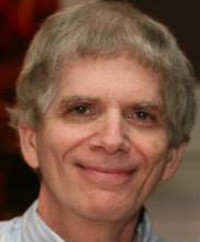 Barry Yedvobnick is a recently retired Biology Professor. He performed molecular biology and genetic research, and taught, at Emory University in Atlanta for 34 years. He is new to fiction writing, and enjoys taking real science a step or two beyond its known boundaries in his
 Emma Louise Gill (she/her) is a British-Australian spec fic writer and consumer of vast amounts of coffee. Brought up on a diet of English lit, she rebelled and now spends her time writing explosive space opera and other fantastical things in