By James C. Clar
The four cavalry troopers waited in a cold, pressurised dome that served as a barracks on a remote corner of the system’s third planet. They were playing cards beneath the wavering glow of a failing plasma lamp. Beyond the thin alloy walls, a storm hissed across the limitless plains, rattling the structure and stirring the low, restless growls of their mounts in the voltaic stables.
“Even the beasts grow impatient,” one of them muttered, tossing his hand onto the metal table. The cards flickered with holographic sigils; a crown, a bow, a blade, a set of scales. He lacked only the card with the death’s head to win the play, but one of his mates had already beaten him to it. They may as well have been playing the same hand over and over. “One short … again!”
“Patience, my brother,” said a second trooper who was cloaked in pale synth-fabric. He reached out and gathered a considerable spill of credit chips toward himself. “You speak as though chance governs this. We are not gamblers. We are instruments. The signal will come when it comes.”
“If it comes,” the first snapped in response. “We’ve languished on this wretched world for untold cycles. For what? We’ve grown old, cold and tired waiting for a command that may never arrive?”
“Deal the cards,” said the third, voice flat, edged with command.
The fourth inclined his head toward the others, luminous eyes reflecting the dim light. “We endure because there is nothing else. We are bound to the whole. If one wavers, we all fail. We wait. And we remain ready. Our hour will come, it’s inevitable.”
The men played on, restless and frustrated.
Time itself stretched and yawned in that cold and sterile place. Outside, the storm intensified, waves of radiation combed the region. Inside, silence thickened as cards were shuffled, dealt and credit chips changed hands monotonously, meaninglessly.
Then it came.
The sound tore through the dome. It was not heard so much as felt, a harmonic blast that vibrated bones and machines alike. It was followed by what seemed a roaring cascade, like oceans emptying in the sky. The structure shuddered violently. The lamp flared once and died.
The first rider was already on his feet. “The Signal!”
They moved as one, abandoning cards and winnings. The bay doors leading to the stable cycled open, wind and static flooded the living space. Their mounts, bioengineered millennia ago for this single fell purpose, strained against their electromagnetic tethers.
“That’s it, men,” the fourth rider shouted instructions. “Remember, we mount and ride in a prescribed order. We must get it right. There can be no deviation.”
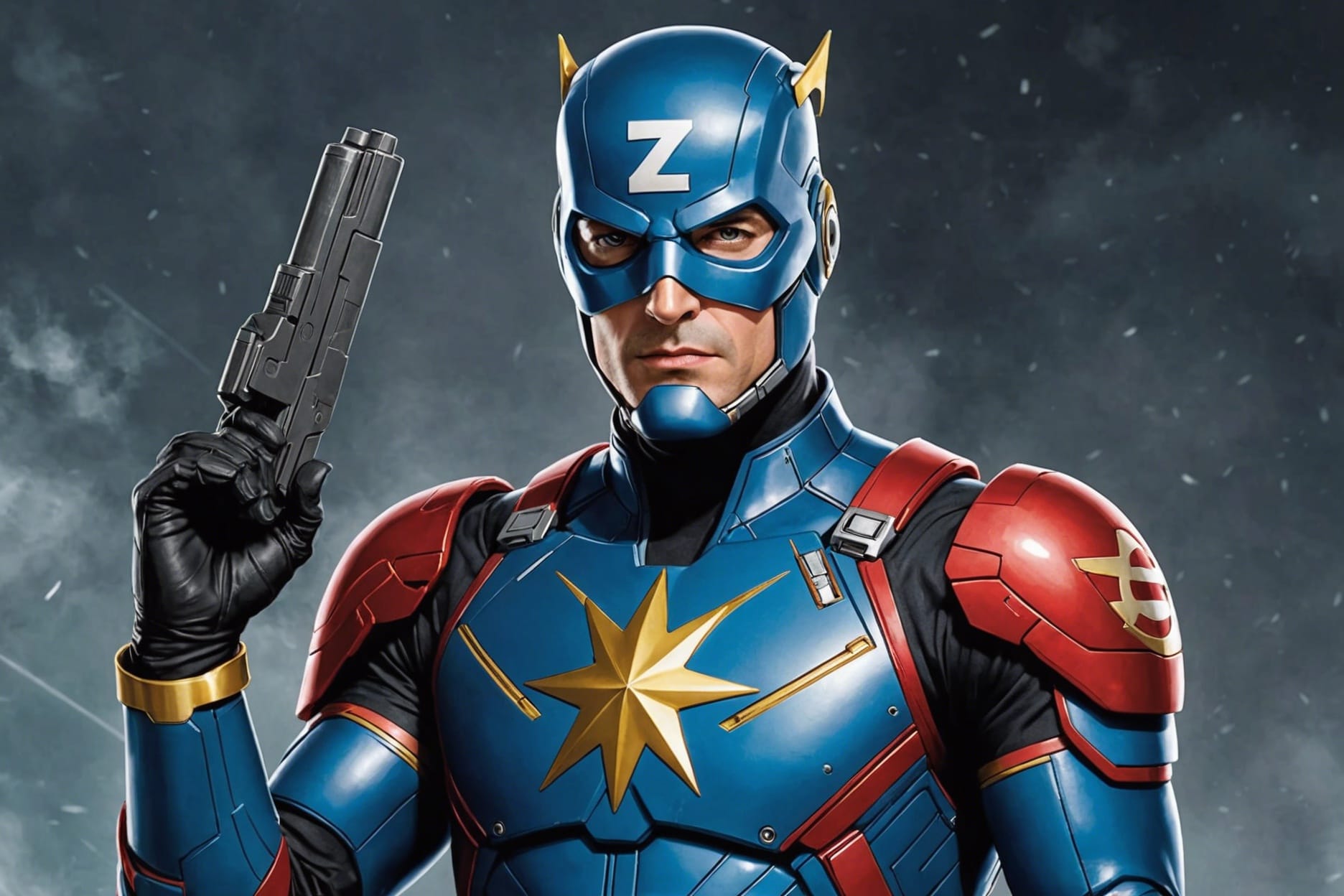
They armed themselves as they ran. The first reached his mount — a sleek, radiant creature, its surface gleaming with the blinding white sheen of virgin snow. It bowed its elongated head as he vaulted into the saddle.
The second mounted a crimson beast, its plated hide pulsing rhythmically like a heartbeat.
The third’s animal was so black that its coat seemed to absorb whatever light, however feeble, struck it. Its predatory eyes were twin points of cold brilliance.
Last came the tallest, a towering creature whose pallid frame shimmered with a sickly, green luminescence, as though it bled light from a spectrum wrought beyond space and time.
Without further hesitation, they launched themselves into the storm.
***
From a ridge overlooking the complex, the outpost commander watched, paralyzed. His tactical visor struggled to compensate as the riders tore relentlessly across the plains and into the wider world that lay beyond.
At first, nothing happened. Then everything, almost at once.
In what remained of the planet’s networked cities, systems failed. Shields collapsed. Autonomous arsenals misfired and exploded. Satellites rained from orbit like burning hail. Conflict ignited — colony against colony, remaining nation against remaining nation.
The first rider moved unseen through command hierarchies, seeding conquest and dominion.
The second followed, and war blossomed in his wake, red, raw and unrestrained.
The third tightened invisible constraints; supply chains broke, resources vanished, hunger spread in measured, merciless increments.
The fourth left only silence. Systems went dark. Signals ceased. Entire populations disappeared. Survivors sought safety in the wastelands. There, native predators now roamed freely. They welcomed the ripe arrival of the interlopers.
The commander watched it all on his display. He’d seen enough. With trembling hands, he removed his helmet. His career was finished. The outpost, the barracks … all rendered irrelevant. The world itself was unravelling, before the appointed time.
He spoke aloud, though there was no one left to hear him.
“Morale was deteriorating,” he reasoned hoarsely. “Arguing. Losing focus and resolve. They needed rehearsal. Just a controlled activation. It was supposed to be a systems’ check. A dry run. Nothing more.”
His gaze drifted to the signal console he wore on his wrist, its surface now rimed with frost. “I sent the initiation sequence,” he whispered, preparing his defense. “Standard protocol. But when I tried to abort…” His voice faltered. “The recall was unresponsive.”
The storm intensified, winds screaming across the ridge. He closed his eyes briefly, then opened them to the gale.
“No matter,” he said. “I will answer for it.” He thought briefly about taking his own life but quickly rejected the idea. He had been many things, but never a coward.
He stood at attention as the ground began to tremble, not from the storm, but from something far greater approaching. A brilliance cut through the gloom. From the horizon emerged a singular figure, moving inexorably closer with ineffable grace. Its mount was a construct of flawless white, brighter than the storm, brighter than the ruined sky itself. The figure halted before him, silent, absolute.
The commander snapped a crisp salute, spine rigid despite the weight pressing on his shoulders, crushing his chest as he tried to breathe. Of all possible outcomes, only one offered any hope. He slowed his breathing, tried to remain calm. The general was, after all, known for his clemency.

About the Author
James C. Clar divides his time between the wilds of Upstate New York and the more congenial climes of Honolulu, Hawaii.
In addition to his previous contributions to Antipodean Sci-Fi, his work has most recently appeared in The Blotter Magazine, Metastellar Magazine, Bright Flash Literary Review, The Magazine of Literary Fantasy and Freedom Fiction Journal.


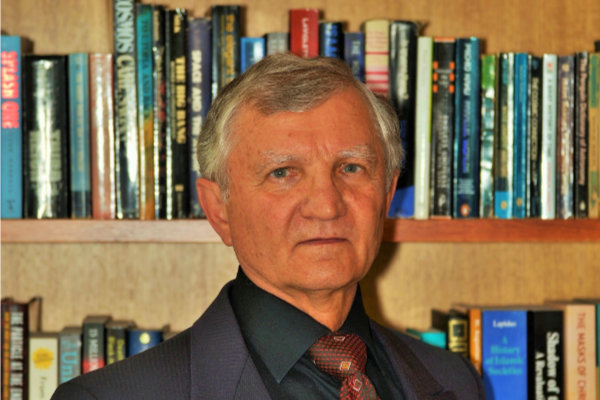

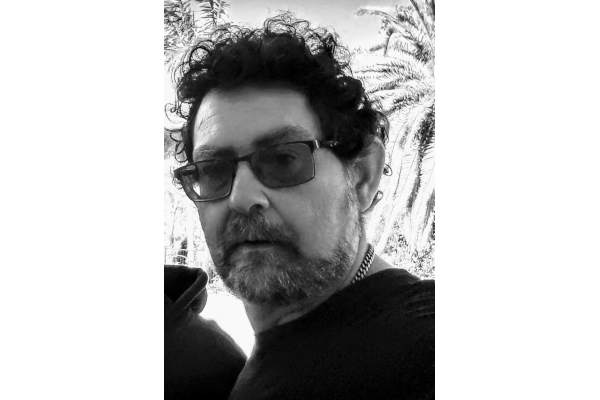
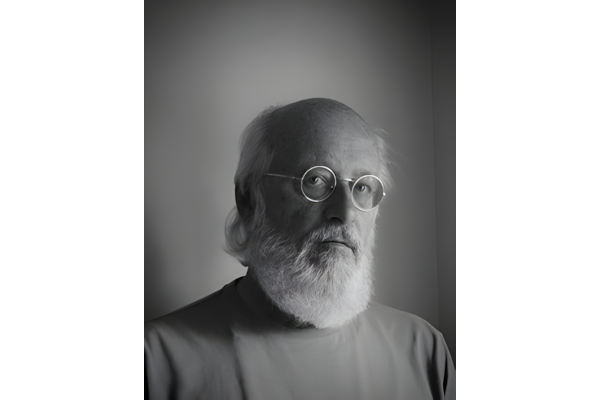
 Geraldine Borella writes fiction for children, young adults and adults. Her work has been published by Deadset Press, IFWG Publishing, Wombat Books/Rhiza Edge, AHWA/Midnight Echo, Antipodean SF, Shacklebound Books, Black Ink Fiction, Paramour Ink Fiction, House of Loki and Raven & Drake
 Ed lives with his wife plus a magical assortment of native animals in tropical North Queensland.
 Tom Wrosch is a retired policy analyst with the State of Oregon, and resides with his wife in Salem.
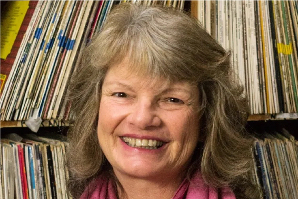 My time at Nambucca Valley Community Radio began back in 2016 after moving into the area from Sydney.
 Sarah Jane Justice is an Adelaide-based fiction writer, poet, musician and spoken word artist.
 Barry Yedvobnick is a recently retired Biology Professor. He performed molecular biology and genetic research, and taught, at Emory University in Atlanta for 34 years. He is new to fiction writing, and enjoys taking real science a step or two beyond its known boundaries in his
 Alistair Lloyd is a Melbourne based writer and narrator who has been consuming good quality science fiction and fantasy most of his life.
 Mark is an astrophysicist and space scientist who worked on the Cassini/Huygens mission to Saturn. Following this he worked in computer consultancy, engineering, and high energy research (with a stint at the JET Fusion Torus).
 Tara Campbell is an award-winning writer, teacher, Kimbilio Fellow, fiction co-editor at Barrelhouse, and graduate of American University's MFA in Creative Writing.
 James Walton was a librarian, a farm labourer, and mostly a public sector union official.
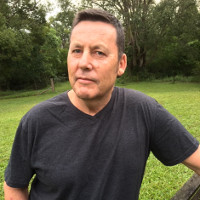 Tim Borella is an Australian author, mainly of short speculative fiction published in anthologies, online and in podcasts.
 Brian Biswas lives in Chapel Hill, North Carolina, USA.