
By Matteo Romano
The officer arrived expecting the usual: a noise complaint, a neighbour dispute, maybe a confused elderly woman who’d locked herself out. He did not expect to spend the next twenty minutes being unsettled by a cat.
“It’s him,” said Senhora Marta, pointing with the absolute conviction of someone filing an affidavit. She had positioned herself beside the window like a witness at a hearing, one hand clutching the lapel of her robe. “Every night. Right there.”
Officer Renato Costa looked.
Grey. Thin. Perched on the exterior windowsill of the building across the narrow street, perfectly still, with an expression that bypassed feline entirely and landed somewhere closer to deliberate.
“Ma’am,” he said gently. “It’s just a cat.”
“It is not just a cat.”
She adjusted her robe with the dignity of someone preparing to testify before a magistrate. Renato had been a cop for eleven years. He had learned to read rooms. This room — clean, dim, smelling faintly of eucalyptus and old coffee — had the particular silence of a house that used to hold two people and now held one.
He pulled out his notebook anyway.
It had started two weeks ago, she explained. First, the vague feeling. Then, the pattern. Every night at 11:17 PM — she knew because she’d started checking, which is its own kind of symptom — the cat appeared on that windowsill, in that exact position, staring directly into her living room. Not at the room. At her.
“Cats do that,” Renato said. “They stare. It’s what they —”
“Not like this.”
And the thing was, she wasn’t wrong about the strangeness of it. Most cats, confronted with a human presence, would rotate an ear toward a sound, twitch at a shadow, perform some minor physical act of existing. This one was motionless. Not sleeping, not resting — watching. With the focused patience of something that had decided to wait for as long as necessary.
On the third night, Marta had run her own experiment. She rearranged her furniture. Sat in a different chair. Turned off all the lights. The cat arrived at the same time, in the same spot, and oriented itself — precisely — toward wherever she happened to be sitting. In the dark.
Renato crossed the room and stood at the window.
The cat did not flinch.
It simply held his gaze. And Renato felt, absurdly, that he had interrupted something — that he had walked into the middle of a conversation he didn’t have the language to follow.
“Strange,” he muttered, and immediately resented himself for saying it.
“I am not crazy,” Marta said quickly. Too quickly.
He believed her. That was the problem.
His radio crackled at his hip. He ignored it. He was still looking at the cat, trying to locate the source of his discomfort, the thing that was making the back of his neck prickle. It wasn’t aggression in those eyes. It wasn’t predation. It was something that didn’t belong in an animal at all.
It looked like recognition.
“I’ve seen this cat before,” Renato said slowly.
“That’s impossible. He only comes here.”
But Renato was already pulling at the thread of a memory he couldn’t quite reach. A building three streets over, about four years ago. A man he’d spoken to briefly. An elderly man who used to lean in his window every evening, watching the street with quiet, unhurried attention, like someone who had nowhere else to be and found, in that fact, a kind of peace.
“Senhora Marta.” He kept his voice professional. “Your husband. When did he pass?”
The room stopped.
She didn’t answer immediately. She looked at the cat.
“A month ago,” she finally said.
The cat tilted its head — slowly, fractionally — to one side.
Renato’s professionalism was holding, but only barely. “Did he… have a habit? Of sitting by a window?”
Marta didn’t look at Renato when she answered. She was still looking at the cat, and her expression had travelled somewhere far from the present moment. “He said he liked to watch the street,” she whispered. “He said you could tell everything about a day by how people walked home.”
The cat blinked.
One long, slow, deliberate blink.
Like a period at the end of a sentence.
Renato stepped back. He was not superstitious. He was a practical man who ate lunch at the same café every Tuesday and filed his reports on time. But there are moments in a life — rare, disorienting — when the rational mind simply runs out of road and has to stop.
“Maybe,” he said carefully, “you should close the curtain.”
Marta did not move.
Because in that moment, looking at the creature who had come every night without fail, who had found her in the dark, who had waited with a patience that had nothing animal about it — she understood something that rearranged everything.
The cat wasn’t watching her.
It was waiting for her to understand something.
All those nights, she had interpreted the stare as surveillance — as a weight, an accusation, the loneliness of her apartment transformed into a grey pair of eyes. But that wasn’t it. It had never been that.
It was insistence.
Come back, the gaze said, in the only language left available. Come back from wherever you’ve gone. I can wait here all night. I have been waiting. I know how to watch a street. I will be here tomorrow. And the night after. You are not alone in this house.
You were never the only one watching.
Marta put her hand against the glass.
The cat pressed its forehead, very lightly, against the other side.
Renato closed his notebook.
Some calls, you don’t write up.

About the Author
 Matteo Romano is a Brazilian-Italian investigative journalist and the author of the satirical air-travel survival guide Sky High Shenanigans (Tellwell, 2026).
He has lived on three continents and written extensively about geopolitical issues.
This is his first appearance in AntipodeanSF.
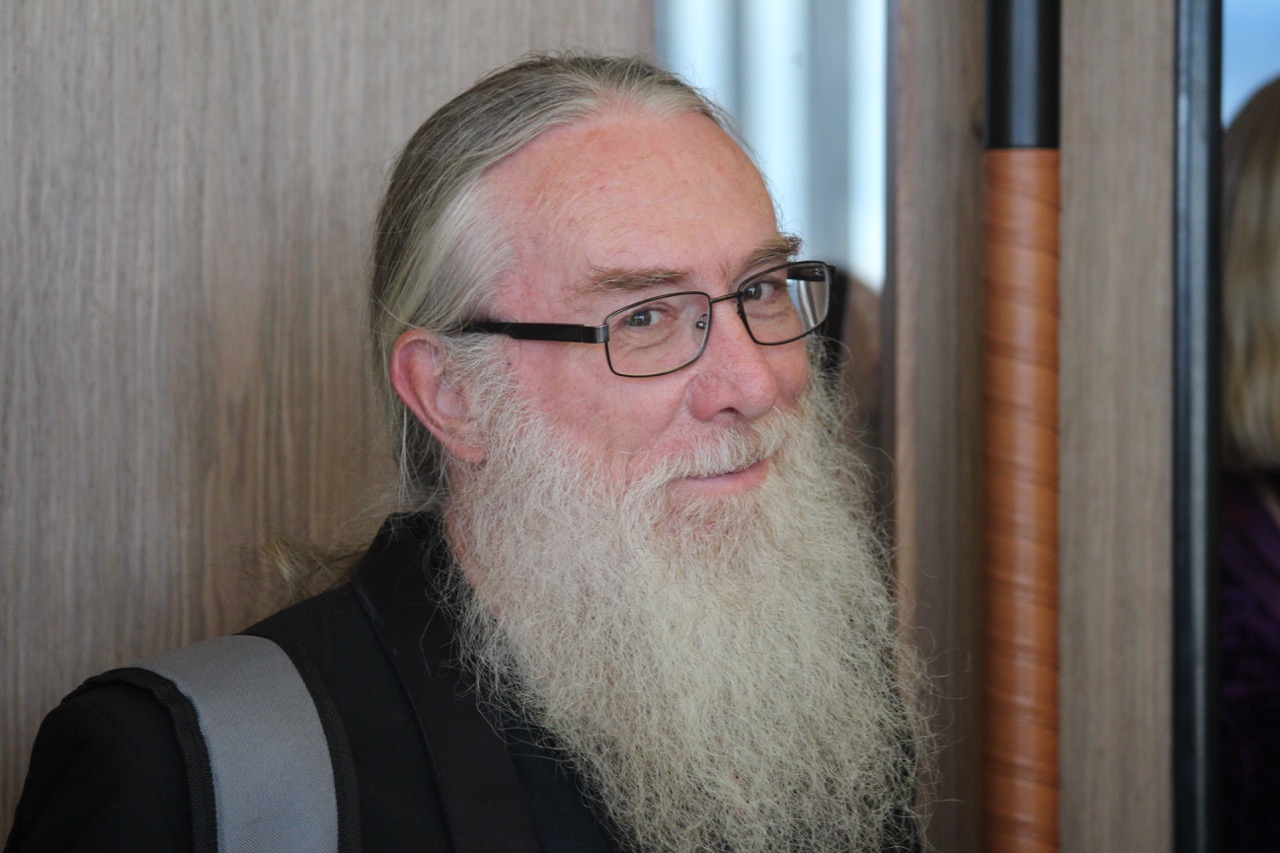
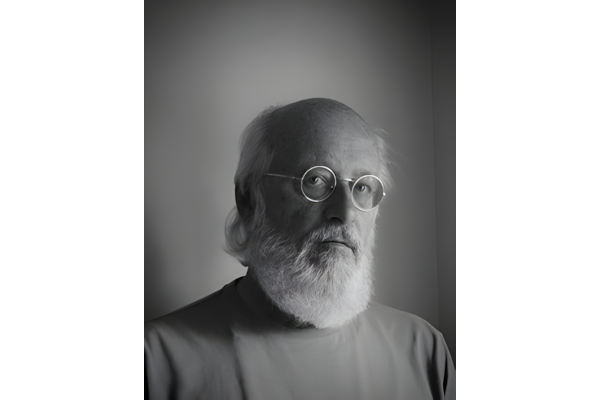








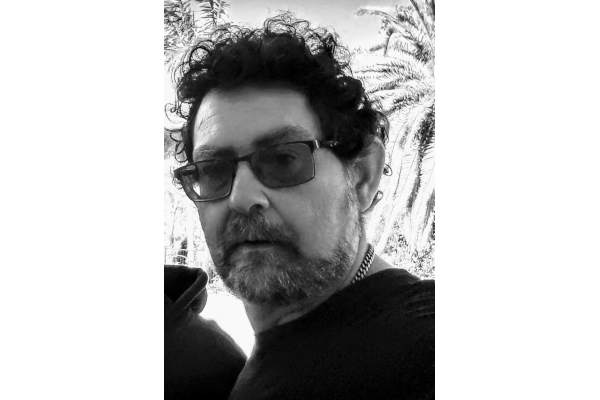




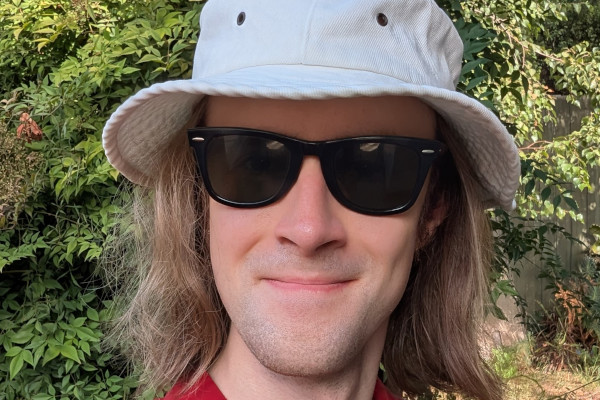
 Tom Wrosch is a retired policy analyst with the State of Oregon, and resides with his wife in Salem.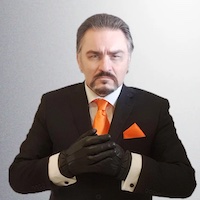
 James Walton was a librarian, a farm labourer, and mostly a public sector union official.
 Brian Biswas lives in Chapel Hill, North Carolina, USA.
 Emma Louise Gill (she/her) is a British-Australian spec fic writer and consumer of vast amounts of coffee. Brought up on a diet of English lit, she rebelled and now spends her time writing explosive space opera and other fantastical things in
 Barry Yedvobnick is a recently retired Biology Professor. He performed molecular biology and genetic research, and taught, at Emory University in Atlanta for 34 years. He is new to fiction writing, and enjoys taking real science a step or two beyond its known boundaries in his
 Alistair Lloyd is a Melbourne based writer and narrator who has been consuming good quality science fiction and fantasy most of his life.
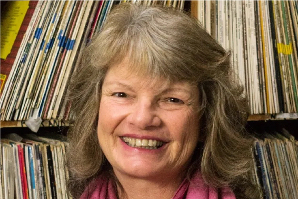 My time at Nambucca Valley Community Radio began back in 2016 after moving into the area from Sydney.
 Sarah Jane Justice is an Adelaide-based fiction writer, poet, musician and spoken word artist.
 Ed lives with his wife plus a magical assortment of native animals in tropical North Queensland.
 Geraldine Borella writes fiction for children, young adults and adults. Her work has been published by Deadset Press, IFWG Publishing, Wombat Books/Rhiza Edge, AHWA/Midnight Echo, Antipodean SF, Shacklebound Books, Black Ink Fiction, Paramour Ink Fiction, House of Loki and Raven & Drake
 Mark is an astrophysicist and space scientist who worked on the Cassini/Huygens mission to Saturn. Following this he worked in computer consultancy, engineering, and high energy research (with a stint at the JET Fusion Torus).
 Tim Borella is an Australian author, mainly of short speculative fiction published in anthologies, online and in podcasts.